|
Notes |
|
|
(0021563)
|
|
Alan Scott
|
|
2010-07-29 18:36
|
|
|
Attached is VisIt's version of xrays. |
|
|
|
(0021564)
|
|
Ken Moreland
|
|
2010-07-29 19:14
|
|
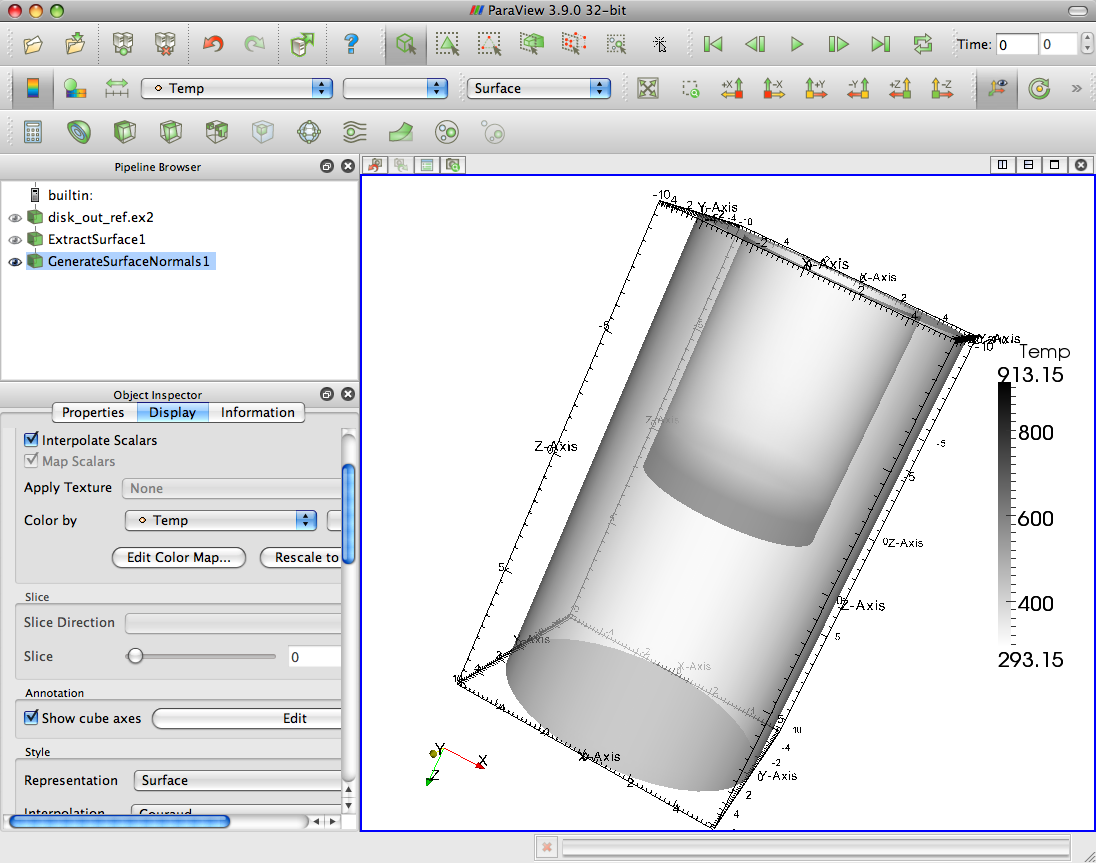
Are you sure your attached image is what the user wants? You just mapped a scalar from white to black and then rendered surfaces with a uniform opacity. ParaView can do that. It's just that the opacity is not exposed when doing a color map. I was able to turn it on through Python, see ParaViewCopy.png.
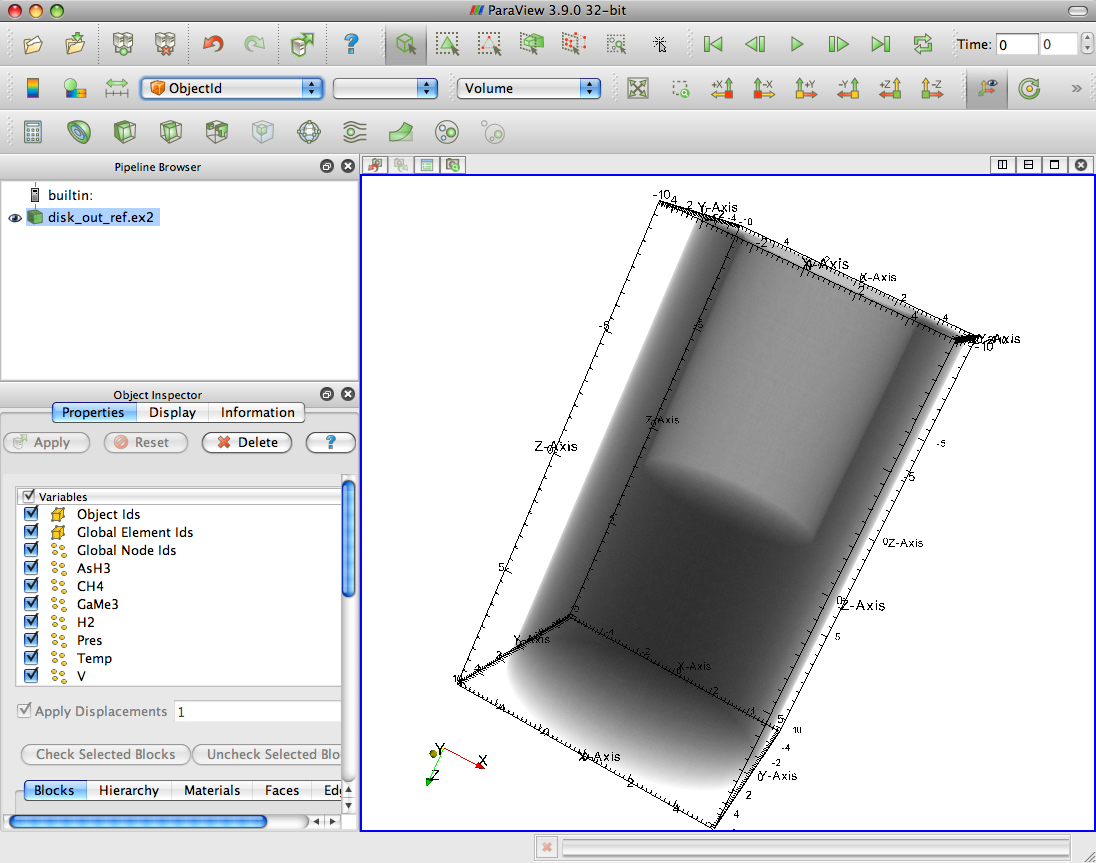
But are you sure what you want isn't volume rendering. Volume rendering roughly computes the same physics as xrays passing through a material. You get images like ParaViewVolRen.png. You just need to set the opacity proportional to the density. (I used a constant density because none of the field variables made a lot of sense as density.) |
|
|
|
(0023788)
|
|
Alan Scott
|
|
2010-12-07 22:00
|
|
|
Reply sent to Utkarsh and Ken. |
|
|
|
(0025196)
|
|
Alan Scott
|
|
2011-01-31 20:30
|
|
|
OK, I did look at what Ken proposed, and it is exactly what we want. |
|
|
|
(0033847)
|
|
Alan Scott
|
|
2014-11-25 20:49
|
|
|
This bug was fixed a long time ago. We now have an xray color map, and further can change opacity due to variables or volume rendering. This resolves this bug. |
|
 radiographExample.png (306,146) 2010-07-29 18:36