
Leverage the power of VTK by partnering with Kitware
What It's Like to Work with Us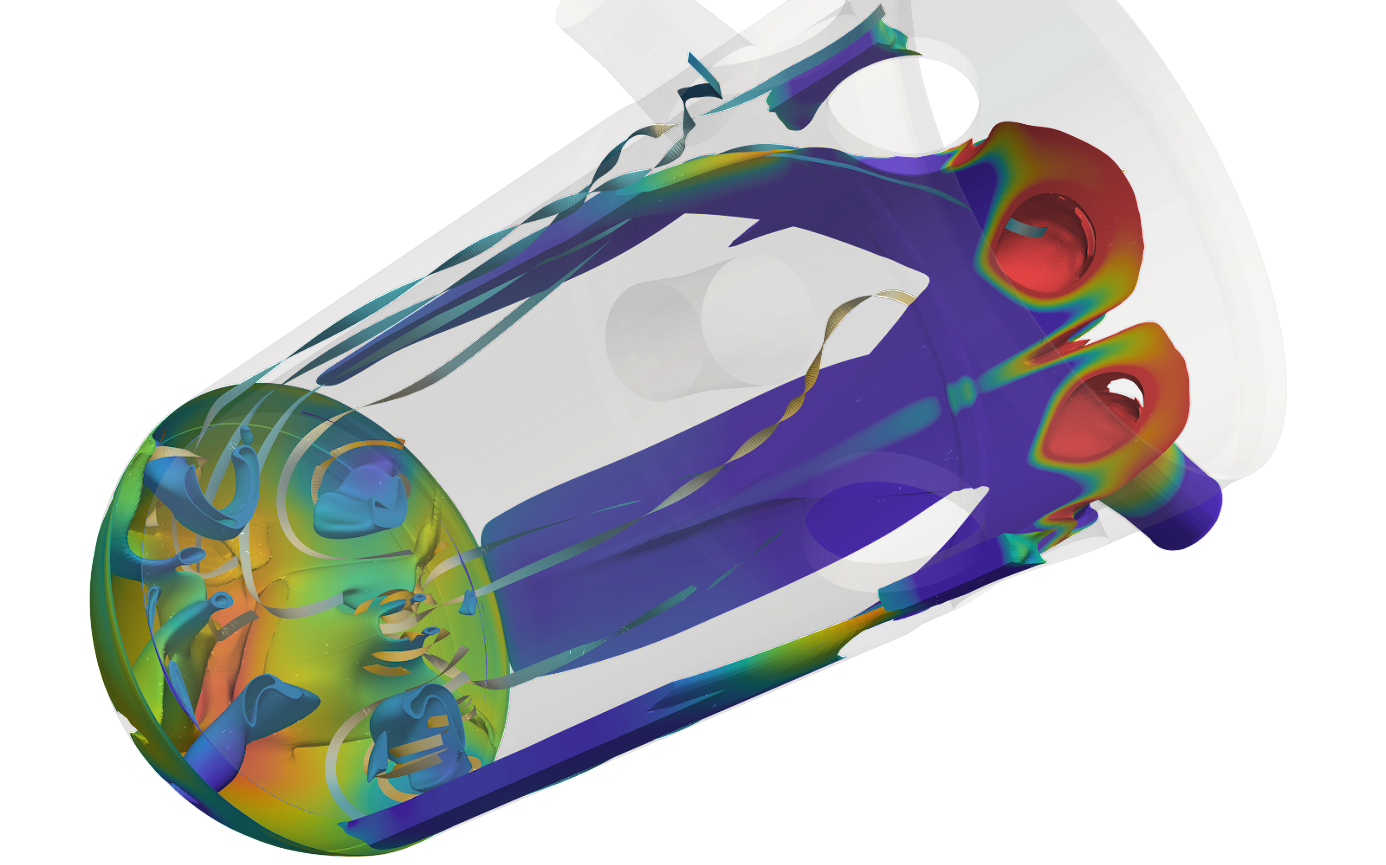
Process images and create 3D computer graphics with the Visualization Toolkit.
The Visualization Toolkit (VTK) is open source software for manipulating and displaying scientific data. It comes with state-of-the-art tools for 3D rendering, a suite of widgets for 3D interaction, and extensive 2D plotting capability.
VTK is part of Kitware’s collection of supported platforms for software development. The platform is used worldwide in commercial applications, as well as in research and development. For examples, please see VTK in Action.
What’s New in VTK-wasm
Scientific and engineering visualization workflows have increasingly moved to the web. Developers are building applications with frameworks such as trame, Jupyter, and Panel that allow users to explore data directly in the browser while computationally intensive processing remains on the server. As these workflows continue to evolve, developers need efficient ways to deliver responsive 3D […]

Building Software for the Next Five Years, Not Just the Next Release
As software projects grow, development often becomes slower and less predictable. Builds take longer, and continuous integration results arrive too late to guide developers. Dependencies become hard to reproduce, and gaps in test coverage let regressions reach users. Even well-planned changes become risky because their effects are difficult to evaluate. These problems are not inevitable […]

ActiViz 9.7 Release
Kitware is pleased to announce the release of ActiViz 9.7.2026.727, the latest version of Kitware’s .NET/C# wrapper for the Visualization Toolkit (VTK). In addition to the key improvements provided by VTK 9.7.0, this release significantly enhances support for the Avalonia framework, pushing the boundaries of cross-platform Graphical User Interface (GUI) integration. ActiViz ActiViz is a […]