#include <vtkPolyData.h>
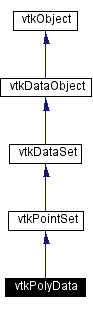
Inheritance diagram for vtkPolyData:
Public Methods | |
| virtual const char * | GetClassName () |
| virtual int | IsA (const char *type) |
| void | PrintSelf (ostream &os, vtkIndent indent) |
| vtkDataObject * | MakeObject () |
| int | GetDataObjectType () |
| void | CopyStructure (vtkDataSet *ds) |
| int | GetNumberOfCells () |
| vtkCell * | GetCell (int cellId) |
| void | GetCell (int cellId, vtkGenericCell *cell) |
| int | GetCellType (int cellId) |
| void | GetCellBounds (int cellId, float bounds[6]) |
| void | GetCellNeighbors (int cellId, vtkIdList *ptIds, vtkIdList *cellIds) |
| void | CopyCells (vtkPolyData *pd, vtkIdList *idList, vtkPointLocator *locator=NULL) |
| void | GetCellPoints (int cellId, vtkIdList *ptIds) |
| void | GetPointCells (int ptId, vtkIdList *cellIds) |
| void | ComputeBounds () |
| void | Squeeze () |
| int | GetMaxCellSize () |
| void | SetVerts (vtkCellArray *v) |
| vtkCellArray * | GetVerts () |
| void | SetLines (vtkCellArray *l) |
| vtkCellArray * | GetLines () |
| void | SetPolys (vtkCellArray *p) |
| vtkCellArray * | GetPolys () |
| void | SetStrips (vtkCellArray *s) |
| vtkCellArray * | GetStrips () |
| int | GetNumberOfVerts () |
| int | GetNumberOfLines () |
| int | GetNumberOfPolys () |
| int | GetNumberOfStrips () |
| void | Allocate (int numCells=1000, int extSize=1000) |
| int | InsertNextCell (int type, int npts, int *pts) |
| int | InsertNextCell (int type, vtkIdList *pts) |
| void | Reset () |
| void | BuildCells () |
| void | BuildLinks () |
| void | DeleteCells () |
| void | DeleteLinks () |
| void | GetPointCells (int ptId, unsigned short &ncells, int *&cells) |
| void | GetCellEdgeNeighbors (int cellId, int p1, int p2, vtkIdList *cellIds) |
| void | GetCellPoints (int cellId, int &npts, int *&pts) |
| int | IsTriangle (int v1, int v2, int v3) |
| int | IsEdge (int v1, int v2) |
| int | IsPointUsedByCell (int ptId, int cellId) |
| void | ReplaceCell (int cellId, int npts, int *pts) |
| void | ReplaceCellPoint (int cellId, int oldPtId, int newPtId) |
| void | ReverseCell (int cellId) |
| void | DeletePoint (int ptId) |
| void | DeleteCell (int cellId) |
| int | InsertNextLinkedPoint (float x[3], int numLinks) |
| int | InsertNextLinkedCell (int type, int npts, int *pts) |
| void | ReplaceLinkedCell (int cellId, int npts, int *pts) |
| void | RemoveCellReference (int cellId) |
| void | AddCellReference (int cellId) |
| void | RemoveReferenceToCell (int ptId, int cellId) |
| void | AddReferenceToCell (int ptId, int cellId) |
| void | ResizeCellList (int ptId, int size) |
| virtual void | Initialize () |
| void | SetUpdateExtent (int piece, int numPieces, int ghostLevel) |
| void | SetUpdateExtent (int piece, int numPieces) |
| void | GetUpdateExtent (int &piece, int &numPieces, int &ghostLevel) |
| virtual int * | GetUpdateExtent () |
| virtual void | GetUpdateExtent (int &, int &, int &, int &, int &, int &) |
| virtual void | GetUpdateExtent (int[6]) |
| void | SetUpdateExtent (int x1, int x2, int y1, int y2, int z1, int z2) |
| void | SetUpdateExtent (int ext[6]) |
| virtual int | GetPiece () |
| virtual int | GetNumberOfPieces () |
| virtual int | GetGhostLevel () |
| unsigned long | GetActualMemorySize () |
| void | ShallowCopy (vtkDataObject *src) |
| void | DeepCopy (vtkDataObject *src) |
| void | GetCellPoints (int cellId, vtkIdList &ptIds) |
| void | GetPointCells (int ptId, vtkIdList &cellIds) |
| int | InsertNextCell (int type, vtkIdList &pts) |
| void | GetCellEdgeNeighbors (int cellId, int p1, int p2, vtkIdList &cellIds) |
Static Public Methods | |
| vtkPolyData * | New () |
| int | IsTypeOf (const char *type) |
| vtkPolyData * | SafeDownCast (vtkObject *o) |
Protected Methods | |
| vtkPolyData () | |
| ~vtkPolyData () | |
| vtkPolyData (const vtkPolyData &) | |
| void | operator= (const vtkPolyData &) |
Protected Attributes | |
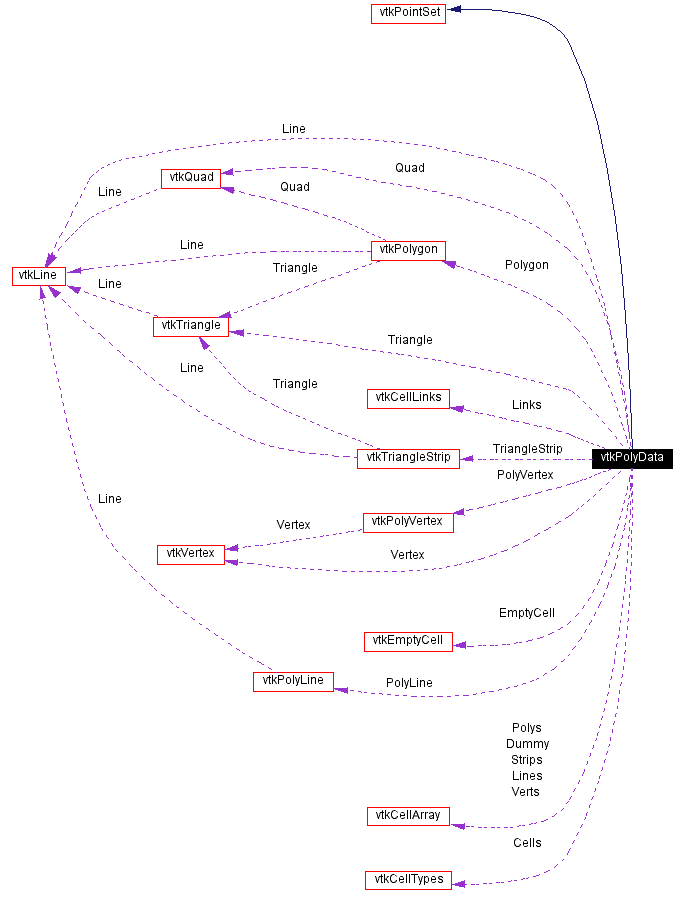
| vtkVertex * | Vertex |
| vtkPolyVertex * | PolyVertex |
| vtkLine * | Line |
| vtkPolyLine * | PolyLine |
| vtkTriangle * | Triangle |
| vtkQuad * | Quad |
| vtkPolygon * | Polygon |
| vtkTriangleStrip * | TriangleStrip |
| vtkEmptyCell * | EmptyCell |
| vtkCellArray * | Verts |
| vtkCellArray * | Lines |
| vtkCellArray * | Polys |
| vtkCellArray * | Strips |
| vtkCellTypes * | Cells |
| vtkCellLinks * | Links |
Static Protected Attributes | |
| vtkCellArray * | Dummy |
vtkPolyData is a data object that is a concrete implementation of vtkDataSet. vtkPolyData represents a geometric structure consisting of vertices, lines, polygons, and triangle strips. Point attribute values (e.g., scalars, vectors, etc.) also are represented.
The actual cell types (CellType.h) supported by vtkPolyData are: vtkVertex, vtkPolyVertex, vtkLine, vtkPolyLine, vtkTriangle, vtkTriangleStrip, vtkPolygon, vtkPixel, and vtkQuad.
One important feature of vtkPolyData objects is that special traversal and data manipulation methods are available to process data. These methods are generally more efficient than vtkDataSet methods and should be used whenever possible. For example, traversing the cells in a dataset we would use GetCell(). To traverse cells with vtkPolyData we would retrieve the cell array object representing polygons (for example) and then use vtkCellArray's InitTraversal() and GetNextCell() methods.
Definition at line 88 of file vtkPolyData.h.
|
|
|
|
|
|
|
|
Definition at line 364 of file vtkPolyData.h. |
|
|
Create an object with Debug turned off, modified time initialized to zero, and reference counting on. Reimplemented from vtkDataObject. Referenced by MakeObject().
|
|
|
Return the class name as a string. This method is defined in all subclasses of vtkObject with the vtkTypeMacro found in vtkSetGet.h. Reimplemented from vtkPointSet. |
|
|
Return 1 if this class type is the same type of (or a subclass of) the named class. Returns 0 otherwise. This method works in combination with vtkTypeMacro found in vtkSetGet.h. Reimplemented from vtkPointSet. |
|
|
Return 1 if this class is the same type of (or a subclass of) the named class. Returns 0 otherwise. This method works in combination with vtkTypeMacro found in vtkSetGet.h. Reimplemented from vtkPointSet. |
|
|
Will cast the supplied object to vtkObject* is this is a safe operation (i.e., a safe downcast); otherwise NULL is returned. This method is defined in all subclasses of vtkObject with the vtkTypeMacro found in vtkSetGet.h. Reimplemented from vtkPointSet. Referenced by vtkPolyDataCollection::GetNextItem().
|
|
||||||||||||
|
Methods invoked by print to print information about the object including superclasses. Typically not called by the user (use Print() instead) but used in the hierarchical print process to combine the output of several classes. Reimplemented from vtkPointSet. |
|
|
Create a similar type object. Reimplemented from vtkDataObject. Definition at line 97 of file vtkPolyData.h. |
|
|
Return what type of dataset this is. Reimplemented from vtkDataSet. Definition at line 100 of file vtkPolyData.h. |
|
|
Copy the geometric and topological structure of an input poly data object. Reimplemented from vtkPointSet. |
|
|
Standard vtkDataSet interface. Reimplemented from vtkDataSet. |
|
|
Get cell with cellId such that: 0 <= cellId < NumberOfCells. THIS METHOD IS NOT THREAD SAFE. Reimplemented from vtkDataSet. |
|
||||||||||||
|
Get cell with cellId such that: 0 <= cellId < NumberOfCells. This is a thread-safe alternative to the previous GetCell() method. THIS METHOD IS THREAD SAFE IF FIRST CALLED FROM A SINGLE THREAD AND THE DATASET IS NOT MODIFIED Reimplemented from vtkDataSet. |
|
|
Get type of cell with cellId such that: 0 <= cellId < NumberOfCells. THIS METHOD IS THREAD SAFE IF FIRST CALLED FROM A SINGLE THREAD AND THE DATASET IS NOT MODIFIED Reimplemented from vtkDataSet. |
|
||||||||||||
|
Get the bounds of the cell with cellId such that: 0 <= cellId < NumberOfCells. A subclass may be able to determine the bounds of cell without using an expensive GetCell() method. A default implementation is provided that actually uses a GetCell() call. This is to ensure the method is available to all datasets. Subclasses should override this method to provide an efficient implementation. THIS METHOD IS THREAD SAFE IF FIRST CALLED FROM A SINGLE THREAD AND THE DATASET IS NOT MODIFIED Reimplemented from vtkDataSet. |
|
||||||||||||||||
|
Topological inquiry to get all cells using list of points exclusive of cell specified (e.g., cellId). THIS METHOD IS THREAD SAFE IF FIRST CALLED FROM A SINGLE THREAD AND THE DATASET IS NOT MODIFIED Reimplemented from vtkDataSet. |
|
||||||||||||||||
|
Copy cells listed in idList from pd, including points, point data, and cell data. This method assumes that point and cell data have been allocated. If you pass in a point locator, then the points won't be duplicated in the output. |
|
||||||||||||
|
Copy a cells point ids into list provided. (Less efficient.) Reimplemented from vtkDataSet. Referenced by AddCellReference(), IsPointUsedByCell(), IsTriangle(), RemoveCellReference(), and ReplaceCellPoint().
|
|
||||||||||||
|
Efficient method to obtain cells using a particular point. Make sure that routine BuildLinks() has been called. Reimplemented from vtkDataSet. Referenced by IsEdge(), and IsTriangle().
|
|
|
Compute the (X, Y, Z) bounds of the data. Reimplemented from vtkPointSet. |
|
|
Recover extra allocated memory when creating data whose initial size is unknown. Examples include using the InsertNextCell() method, or when using the CellArray::EstimateSize() method to create vertices, lines, polygons, or triangle strips. Reimplemented from vtkPointSet. |
|
|
Return the maximum cell size in this poly data. Reimplemented from vtkDataSet. |
|
|
Set the cell array defining vertices. |
|
|
Get the cell array defining vertices. If there are no vertices, an empty array will be returned (convenience to simplify traversal). |
|
|
Set the cell array defining lines. |
|
|
Get the cell array defining lines. If there are no lines, an empty array will be returned (convenience to simplify traversal). |
|
|
Set the cell array defining polygons. |
|
|
Get the cell array defining polygons. If there are no polygons, an empty array will be returned (convenience to simplify traversal). |
|
|
Set the cell array defining triangle strips. |
|
|
Get the cell array defining triangle strips. If there are no triangle strips, an empty array will be returned (convenience to simplify traversal). |
|
|
Return the number of primitives of a particular type held.. |
|
|
|
|
|
|
|
|
|
|
||||||||||||
|
Method allocates initial storage for vertex, line, polygon, and triangle strip arrays. Use this method before the method PolyData::InsertNextCell(). (Or, provide vertex, line, polygon, and triangle strip cell arrays.) |
|
||||||||||||||||
|
Insert a cell of type vtkVERTEX, vtkPOLY_VERTEX, vtkLINE, vtkPOLY_LINE, vtkTRIANGLE, vtkQUAD, vtkPOLYGON, or vtkTRIANGLE_STRIP. Make sure that the PolyData::Allocate() function has been called first or that vertex, line, polygon, and triangle strip arrays have been supplied. Note: will also insert vtkPIXEL, but converts it to vtkQUAD. |
|
||||||||||||
|
Insert a cell of type VTK_VERTEX, VTK_POLY_VERTEX, VTK_LINE, VTK_POLY_LINE, VTK_TRIANGLE, VTK_QUAD, VTK_POLYGON, or VTK_TRIANGLE_STRIP. Make sure that the PolyData::Allocate() function has been called first or that vertex, line, polygon, and triangle strip arrays have been supplied. Note: will also insert VTK_PIXEL, but converts it to VTK_QUAD. |
|
|
Begin inserting data all over again. Memory is not freed but otherwise objects are returned to their initial state. |
|
|
Create data structure that allows random access of cells. |
|
|
Create upward links from points to cells that use each point. Enables topologically complex queries. |
|
|
Release data structure that allows random access of the cells. This must be done before a 2nd call to BuildLinks(). DeleteCells implicitly deletes the links as well since they are no longer valid. |
|
|
Release the upward links from point to cells that use each point. |
|
||||||||||||||||
|
Special (efficient) operations on poly data. Use carefully. Definition at line 402 of file vtkPolyData.h. |
|
||||||||||||||||||||
|
Get the neighbors at an edge. More efficient than the general GetCellNeighbors(). Assumes links have been built (with BuildLinks()), and looks specifically for edge neighbors. |
|
||||||||||||||||
|
Return a pointer to a list of point ids defining cell. (More efficient.) Assumes that cells have been built (with BuildCells()). |
|
||||||||||||||||
|
Given three vertices, determine whether it's a triangle. Make sure BuildLinks() has been called first. Definition at line 409 of file vtkPolyData.h. |
|
||||||||||||
|
Determine whether two points form an edge. If they do, return non-zero. Make sure BuildLinks() has been called first. Definition at line 453 of file vtkPolyData.h. |
|
||||||||||||
|
Determine whether a point is used by a particular cell. If it is, return non-zero. Make sure BuildCells() has been called first. Definition at line 438 of file vtkPolyData.h. Referenced by IsEdge().
|
|
||||||||||||||||
|
Replace the points defining cell "cellId" with a new set of points. This operator is(typically) used when links from points to cells have not been built (i.e., BuildLinks() has not been executed). Use the operator ReplaceLinkedCell() to replace a cell when cell structure has been built. |
|
||||||||||||||||
|
Replace a point in the cell connectivity list with a different point. Definition at line 505 of file vtkPolyData.h. |
|
|
Reverse the order of point ids defining the cell. |
|
|
Mark a point/cell as deleted from this vtkPolyData. Definition at line 470 of file vtkPolyData.h. |
|
|
Definition at line 475 of file vtkPolyData.h. |
|
||||||||||||
|
Add a point to the cell data structure (after cell pointers have been built). This method adds the point and then allocates memory for the links to the cells. (To use this method, make sure points are available and BuildLinks() has been invoked.) |
|
||||||||||||||||
|
Add a new cell to the cell data structure (after cell pointers have been built). This method adds the cell and then updates the links from the points to the cells. (Memory is allocated as necessary.) |
|
||||||||||||||||
|
Replace one cell with another in cell structure. This operator updates the connectivity list and the point's link list. It does not delete references to the old cell in the point's link list. Use the operator RemoveCellReference() to delete all references from points to (old) cell. You may also want to consider using the operator ResizeCellList() if the link list is changing size. |
|
|
Remove all references to cell in cell structure. This means the links from the cell's points to the cell are deleted. Memory is not reclaimed. Use the method ResizeCellList() to resize the link list from a point to its using cells. (This operator assumes BuildLinks() has been called.) Definition at line 480 of file vtkPolyData.h. |
|
|
Add references to cell in cell structure. This means the links from the cell's points to the cell are modified. Memory is not extended. Use the method ResizeCellList() to resize the link list from a point to its using cells. (This operator assumes BuildLinks() has been called.) Definition at line 490 of file vtkPolyData.h. |
|
||||||||||||
|
Remove a reference to a cell in a particular point's link list. You may also consider using RemoveCellReference() to remove the references from all the cell's points to the cell. This operator does not reallocate memory; use the operator ResizeCellList() to do this if necessary. |
|
||||||||||||
|
Add a reference to a cell in a particular point's link list. (You may also consider using AddCellReference() to add the references from all the cell's points to the cell.) This operator does not realloc memory; use the operator ResizeCellList() to do this if necessary. |
|
||||||||||||
|
Resize the list of cells using a particular point. (This operator assumes that BuildLinks() has been called.) Definition at line 500 of file vtkPolyData.h. |
|
|
Restore object to initial state. Release memory back to system. Reimplemented from vtkPointSet. |
|
||||||||||||||||
|
For streaming. User/next filter specifies which piece they want updated. The source of this poly data has to return exactly this piece. |
|
||||||||||||
|
Reimplemented from vtkDataObject. Definition at line 314 of file vtkPolyData.h. |
|
||||||||||||||||
|
|
|
|
We need this here to avoid hiding superclass method Reimplemented from vtkDataObject. |
|
||||||||||||||||||||||||||||
|
Reimplemented from vtkDataObject. |
|
|
Reimplemented from vtkDataObject. |
|
||||||||||||||||||||||||||||
|
Call superclass method to avoid hiding Since this data type does not use 3D extents, this set method is useless but necessary since vtkDataSetToDataSetFilter does not know what type of data it is working on. Reimplemented from vtkDataObject. Definition at line 325 of file vtkPolyData.h. |
|
|
Reimplemented from vtkDataObject. Definition at line 327 of file vtkPolyData.h. |
|
|
Set / Get the piece and the number of pieces. Similar to extent in 3D. |
|
|
|
|
|
Get the ghost level. |
|
|
Return the actual size of the data in kilobytes. This number is valid only after the pipeline has updated. The memory size returned is guaranteed to be greater than or equal to the memory required to represent the data (e.g., extra space in arrays, etc. are not included in the return value). THIS METHOD IS THREAD SAFE. Reimplemented from vtkPointSet. |
|
|
Shallow and Deep copy. Reimplemented from vtkPointSet. |
|
|
Reimplemented from vtkPointSet. |
|
||||||||||||
|
For legacy compatibility. Do not use. Reimplemented from vtkDataSet. Definition at line 351 of file vtkPolyData.h. |
|
||||||||||||
|
Reimplemented from vtkDataSet. Definition at line 353 of file vtkPolyData.h. |
|
||||||||||||
|
Definition at line 355 of file vtkPolyData.h. |
|
||||||||||||||||||||
|
Definition at line 357 of file vtkPolyData.h. |
|
|
Definition at line 365 of file vtkPolyData.h. |
|
|
Definition at line 368 of file vtkPolyData.h. |
|
|
Definition at line 369 of file vtkPolyData.h. |
|
|
Definition at line 370 of file vtkPolyData.h. |
|
|
Definition at line 371 of file vtkPolyData.h. |
|
|
Definition at line 372 of file vtkPolyData.h. |
|
|
Definition at line 373 of file vtkPolyData.h. |
|
|
Definition at line 374 of file vtkPolyData.h. |
|
|
Definition at line 375 of file vtkPolyData.h. |
|
|
Definition at line 376 of file vtkPolyData.h. |
|
|
Definition at line 380 of file vtkPolyData.h. |
|
|
Definition at line 381 of file vtkPolyData.h. |
|
|
Definition at line 382 of file vtkPolyData.h. |
|
|
Definition at line 383 of file vtkPolyData.h. |
|
|
Definition at line 386 of file vtkPolyData.h. |
|
|
Definition at line 390 of file vtkPolyData.h. |
|
|
Definition at line 391 of file vtkPolyData.h. |
 1.2.11.1 written by Dimitri van Heesch,
© 1997-2001
1.2.11.1 written by Dimitri van Heesch,
© 1997-2001